Detail
The Science Slam Bern at the Museumsnacht 2026

Alumni UniBE Corporate
27/03/2026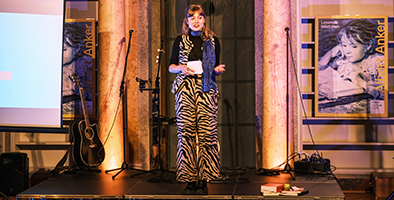
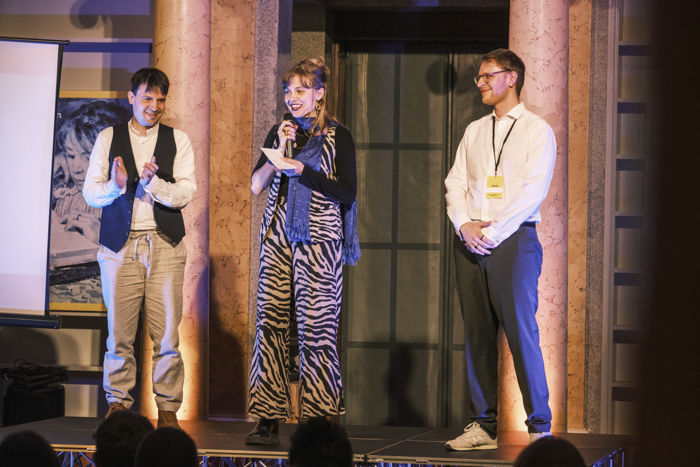
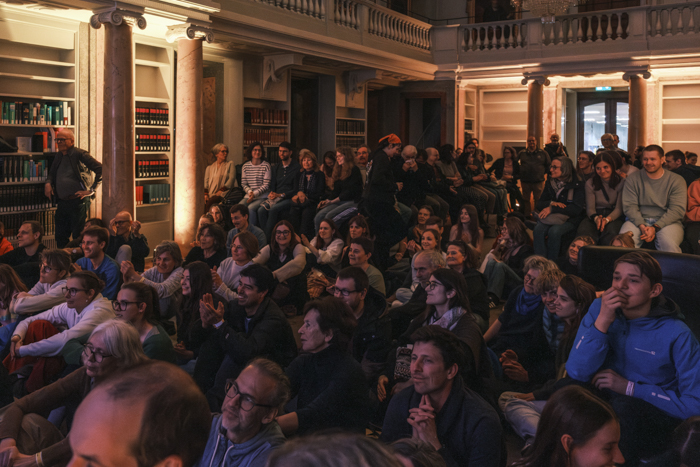
The Science Slam Bern was once again part of Museumsnacht 2026 and, as in the previous year, attracted numerous spectators to the packed historic Schultheissensaal in the Münstergasse library in Bern. The three slam duels were hosted by the likeable presenter Franziska Burger, herself a former science slammer. She first gave the audience a brief insight into the history of the hall, then explained the duel format and finally introduced the slammers. The winners were chosen immediately after the duels by the applause of the audience.
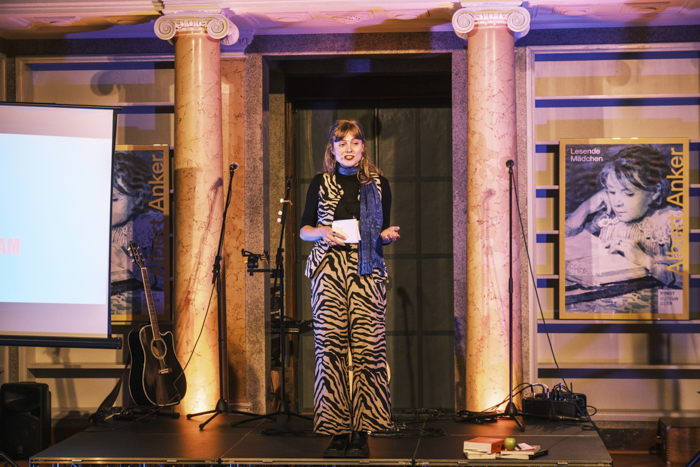
Simona Procacci opened the first slam. The Schultheissensaal is a familiar place for Simona: This is where she wrote her Bachelor's thesis and prepared for exams. With a twinkle in her eye, she recounts how she once failed to study for a nuclear physics exam and was teased by her fellow students when she unwrapped a banana that was supposedly radioactive.
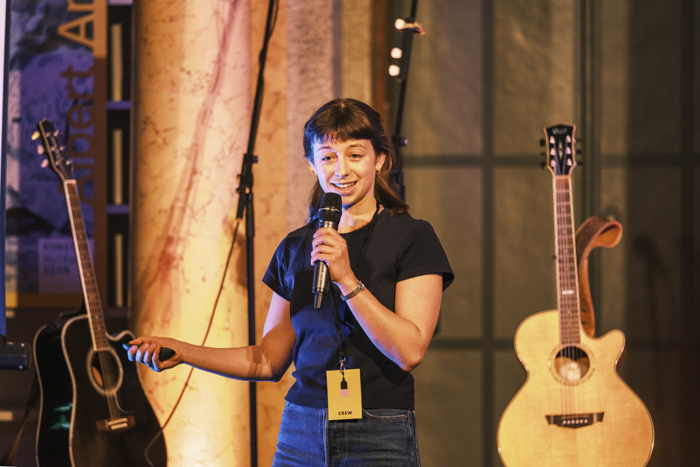
In her science slam "Shining", she explains temperature measurement in the universe to the audience. She vividly demonstrates the importance of radiation as moving energy and uses humor to make it clear that the universe used to be warmer than it is today. This temperature development can even be measured using specially developed thermometers.
Jonas Biedermann competed in a duel against Simona. In his slam "What's in the voice?", the voice becomes the main suspect in his criminal case as an audio detective. Using a single word, he showed that people perceive frequencies differently: While some hear "Laurel", others perceive "Yanny".
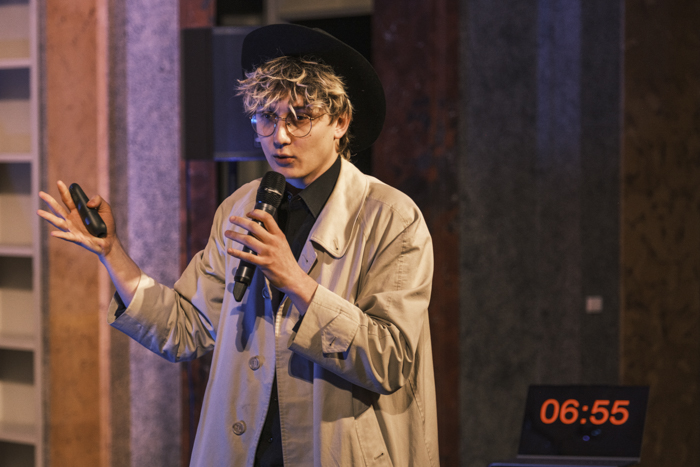
The word was analyzed using a spectrogram and it was made visible that several frequencies sound simultaneously. People who hear "Laurel" tend to focus on the lower tones (fundamental frequency), while those who perceive "Yanny" pay attention to the higher tones and the so-called formants, concentrated energy areas in the sound spectrum.
Jonas won the slam duel against Simona Procacci.
Daniel Angerhausen started the second slam duel. In his slam "AI seeks ET ... on the moon", Daniel took the audience on a journey into research into the search for technosignatures, i.e. technological traces in space, or in his words: the search for extraterrestrial intelligence (SETI). He pointed out that the first aluminum flag on the moon, one of the first experiments of the Apollo mission, was built in Bern and even placed in front of the American flag.
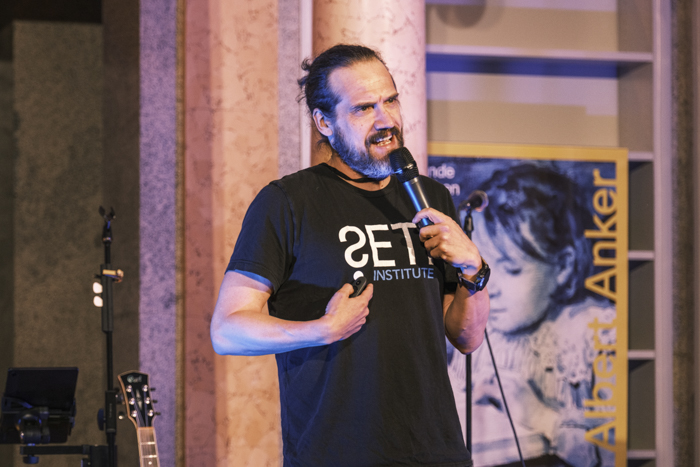
Using Pokémon images, he explained how AI is used in the search for technosignatures: Images are fed into an autoencoder, which reconstructs them as faithfully as possible. However, if new, unknown images are entered, a so-called reconstruction loss occurs, deviations that indicate anomalies.
His conclusion: the exploration, investigation and possible colonization of the moon should be discussed as a social task and not just be left to a financially strong group.
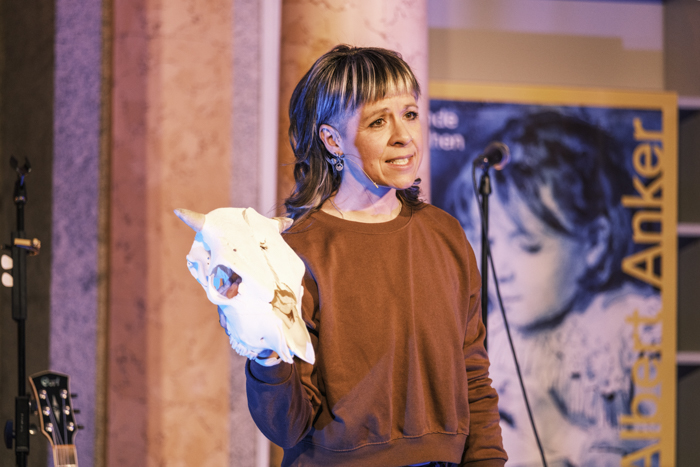
Daniel faced Sonja Schöneberger as his duel partner. Sonja has been dealing with the issue of meat consumption for eight years. In her science slam "250 kg Warheit - Die Enthüllung eines Rindes über unsere Tomatenwelt" (250 kg of truth - a cow's revelation about our tomato world), she talked about a formative encounter with a bull calf that was slaughtered, an experience that she experienced so directly for the first time and which left a strong impression on her.
Based on this, she pointed out that around 80 million animals are slaughtered in Switzerland every year. She posed the question of what would happen if we moved from pure consumption to active co-creation: if humans, animals and nature lived in harmony with each other and were connected in a cycle that focused on mutual respect.
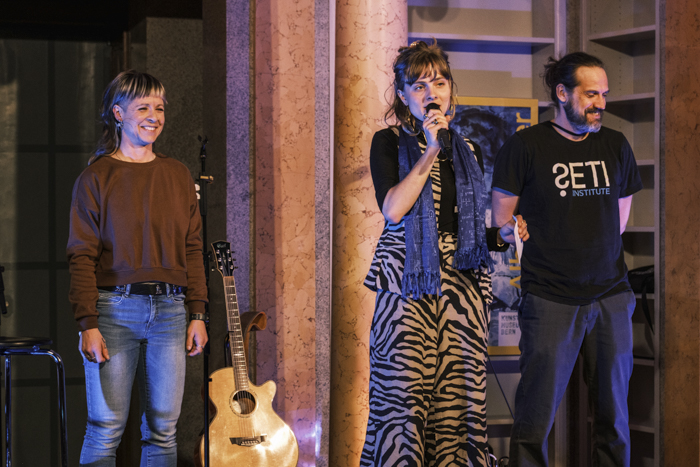
Sonja won the second slam duel.
Reto Nardini opened the third duel of the evening with his slam "Experience: everyday and unspeakable" and made it clear that experience cannot always be put into words, impressively accompanied by a cello interlude.
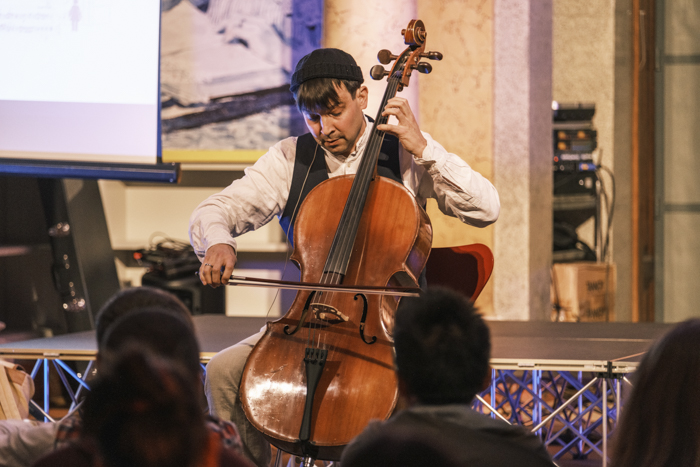
He poetically led the audience through his examination of "experiences" and came to his central realization: what can only be experienced in the moment, such as music, eludes language and purely intellectual access and ultimately remains an immediate experience.
His duel opponent Simon Graf picked up on this with his slam "Recht verständlich" ("Law understandable") and made it clear where artificial intelligence reaches its limits when interpreting the law.
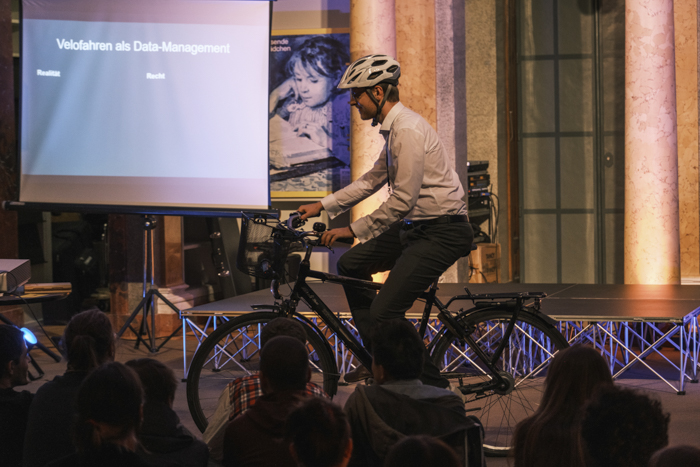
This was illustrated by the question of whether you are allowed to cycle around a library. He brought his bike with him and took it for a spin around the stage.
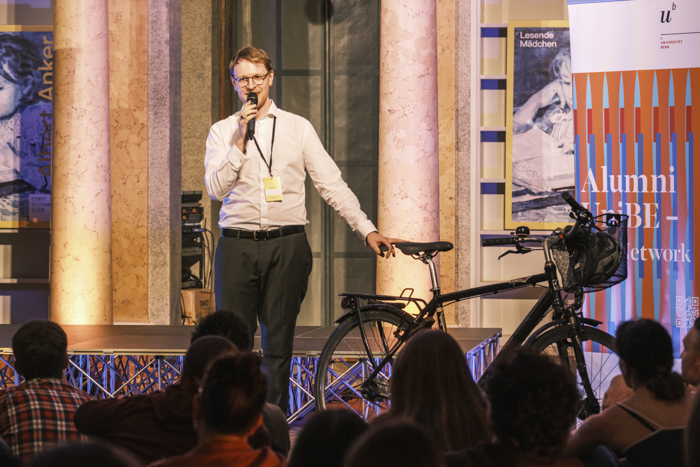
His slam showed how AI can very quickly reproduce linguistically what individual terms mean without context, but as soon as the terms are put into context and an interpretation of a specific situation is asked for, this does not make sense or does not result in a coherent solution that could be applied to a case.